Si buscas
hosting web,
dominios web,
correos empresariales o
crear páginas web gratis,
ingresa a
PaginaMX
Por otro lado, si buscas crear códigos qr online ingresa al Creador de Códigos QR más potente que existe


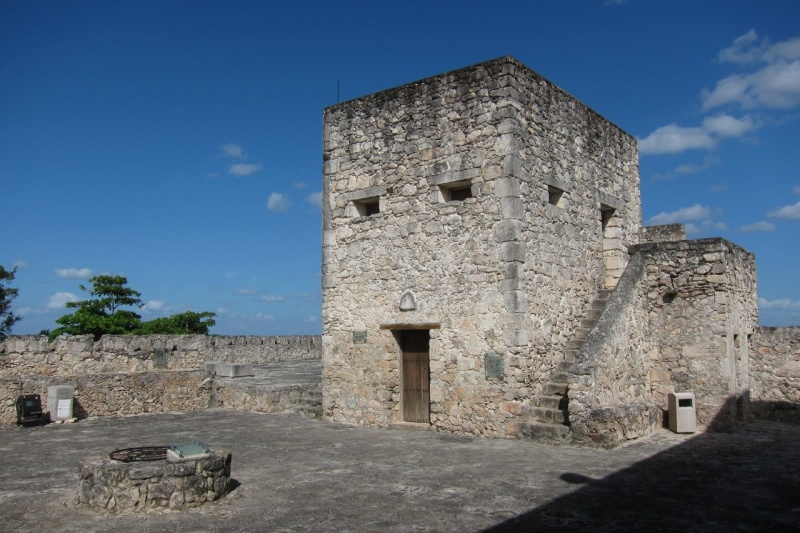
FUERTE DE BACALAR
Bacalar
Location of Bacalar, Quintana Roo
Coordinates: 18 ° 40'37 "N 88 ° 23'43" OCoordenadas: 18 ° 40'37 "N 88 ° 23'43" O (map)
Entity Location
• Country Flag of Mexico Mexico
• State Quintana Roo
• Bacalar Municipality
• Foundation 1545 (Melchor Pacheco)
Altitude
• Media 20 m
Distance 45 km to Chetumal
Population (2010)
• Total 11,048 Hab.1
Gentilicio Bacalerense
Time zone Time Southeast (UTC -5)
• summer UTC -4
ZIP Code 77930
Calling code 983
Official website
[Edit data in Wikidata]
Bacalar (in maya: Bakhalal, 'Near or surrounded by reeds')? is a town in the Mexican state of Quintana Roo, located in the south of its territory about 40 km north of the capital, Chetumal.
From the February 2, 2011 he is head of the municipality of Bacalar.2
Bacalar is located on the shores of Laguna Bacalar, the largest of the lakes of southern Quintana Roo and great tourist attraction.
History [edit]
Mayan era [edit]
Between 415-435 AD, from the south, the Maya founded what today is Bacalar with the name of Sian Ka'an Bakhalal, staying in place nearly 60 years. It is estimated that in the year 495, the Itzaés leave the place.
.jpg) Around 1461, after the collapse of the so-called league of Mayapan, chiefdoms were established in the Yucatan Peninsula. In the territory of what is now Quintana Roo, the kuxkabales (chiefdoms) of Ekab, Tazes, Uaymil and partly that of Chactemal, Cochuah the Cupul and the Chikinchel found. Bakhalal was the most important point Uaymil chiefdom. At the dawn of the sixteenth century the Spanish arrived, they found the Maya in those conditions of political and administrative fragmentation and soon conquered the region.3
Around 1461, after the collapse of the so-called league of Mayapan, chiefdoms were established in the Yucatan Peninsula. In the territory of what is now Quintana Roo, the kuxkabales (chiefdoms) of Ekab, Tazes, Uaymil and partly that of Chactemal, Cochuah the Cupul and the Chikinchel found. Bakhalal was the most important point Uaymil chiefdom. At the dawn of the sixteenth century the Spanish arrived, they found the Maya in those conditions of political and administrative fragmentation and soon conquered the region.3Spanish conquest and colonization [edit]
The first contacts of the conquerors were in 1531 when Francisco de Montejo (father or "the advance) assigned the conquest of the area to Alonso Davila who arrived in Tulum and Bakhalal founding a population that called Villa Real, but had to abandon it surprise attacks of the Maya. In 1543 Francisco de Montejo and Leon "the Mozo" (son of "the front"), assigned the task of subduing the area of Bacalar Gaspar Melchor Pacheco and his son again, Spaniards subjected to a number of Indians, and in 1544 Melchor Pacheco founded the current population, naming Salamanca Bacalar yet so far from the population and poor communications with the provincial capital at that time, Mérida, Yucatán always made difficult the population of Bacalar.
In the colonial era in 1630, the largest settlement on the east coast of the Yucatan peninsula was Bacalar, with only about thirty people was the halfway point on the way to the distant provinces of Guatemala and Honduras, during the seventeenth century, Bacalar was constantly attacked by pirates who came through channels to disembark the lagoon.
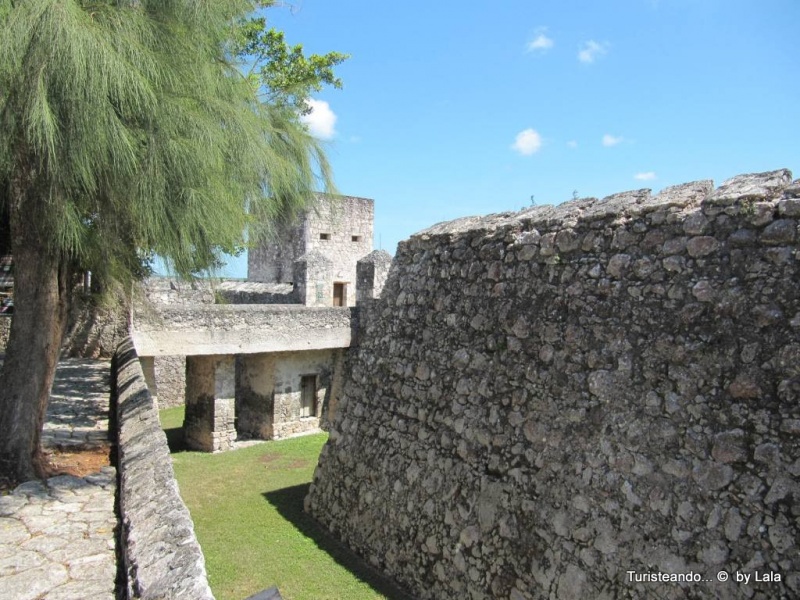
Fort San Felipe de Bacalar.
Until 1639 the Maya of Quintana Roo had not been fully conquered, retreating into the jungle (that was the background that led to the Caste War in the nineteenth century founding the city of Chan Santa Cruz in 1850, the capital of the Mayan people, today Felipe Carrillo Puerto in Quintana Roo, under British protection, who traded until 1893). In 1640 the Scottish pirate Peter Wallace was established south of the state of Quintana Roo, and dedicated to the exploitation of logwood, becoming the first English settlement south of the Rio Hondo and that was the origin of what is today Belize. In 1652 Bacalar was devastated by the Cuban Diego the Mulatto, which led to the almost total abandonment of the east coast. The attacks of English, French and Dutch continued during the eighteenth century because they wanted to control traffic logwood, moreover continued attacks Mayan rebels. This made the decision to fortify the city was taken and the fort of San Felipe de Bacalar was erected on the banks of the lagoon completed in 1729. Developed in a safe place, Bacalar prospered and exported mahogany, logwood, sugar, some fruits , goats, pigs and cattle. Currently the fort of San Felipe houses a museum.
Caste War [edit]
By 1848 the population of Bacalar was about 5000 people, the same year he burst into the Yucatan peninsula called Caste War, by which the Maya revolted against the Mexican government, one of his first goals was Bacalar, was attacked and scorched, Maya leaders were Jose Venancio Pec, Jacinto Pat and Cecilio Chi, people who survived fled to the British colony of British Honduras and Bacalar was depopulated until it was returned to reconquer by a Mexican military column under the command of Admiral Angel Ortiz Monastery in 1902.
It was Othon P. Blanco with a peace party managed to approach the Maya and make them recognize the government of the republic.
Update [edit]
Since its repopulation, development of Bacalar has continued to the present, in the Census of Population and Housing 2005, conducted by the INEGI, resulted in a population of 9833 inhabitants, Bacalar is also a development center for many communities located in the surrounding area and nearby.
On June 26, 2007, by resolution of the council of Othon P. Blanco, Bacalar was elevated to city status; 4 and February 2, 2011 by decree of the Congress of Quintana Roo was established at the head of the new town of Bacalar .2
Bacalar is located in the southern state of Quintana Roo at the geographic coordinates 18 ° 40'37 "N 88 ° 23'43" O and an altitude of 10 meters above sea level, lies at a distance of 45 kilometers north of the city of Chetumal to joining the Federal Highway 307 between Bacalar and Chetumal is a four-lane highway to the north the same road connects with the cities of Felipe Carrillo Puerto, Playa del Carmen and Cancun; Bacalar is next to the lake that bears its name, Laguna Bacalar.
The results of the Census of Population and Housing conducted in 2005 by the National Institute of Statistics and Geography Bacalar indicate that a total of 9833 inhabitants, 4783 men and 5050 women.5
Tourism [edit]
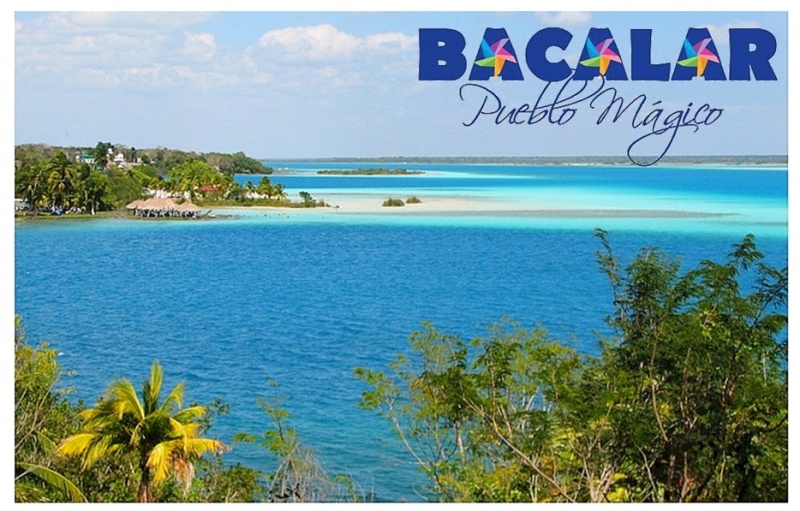
Laguna Bacalar.
Currently Bacalar is a town dedicated primarily to tourism, which develops between the lagoon where it is located and the nearby Mayan archaeological sites and the city of Chetumal.
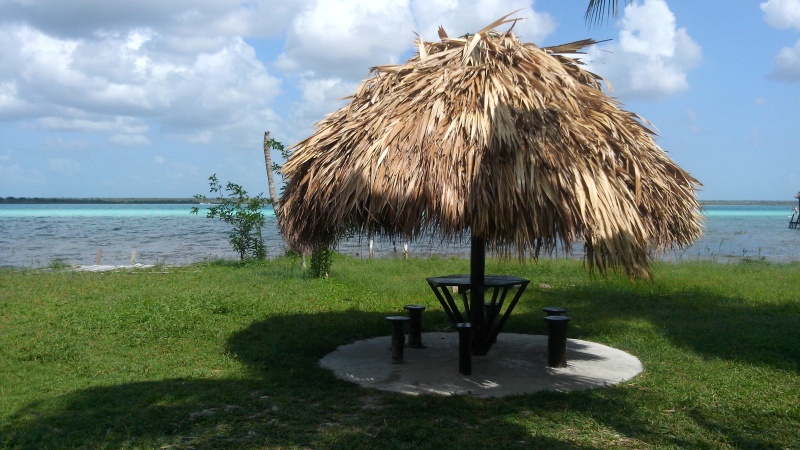
The main attraction of the city is the Laguna, on whose banks is a spa where you can swim, also offers palapas to eat, boating on the lake and other services. The Museum of the Caste War located in the old fort San Felipe shows weapons and objects of the founders of Bacalar and the struggle between them and the Mayan groups and pirates attack suffered by the city. Another major attraction of the city is the Blue Cenote, located four miles south of the city, is famous for the transparency of its waters, which allow to observe perfectly from the surface to a depth of over 30 meters, on the shores of cenote is a restaurant.
On October 2, 2007 the State Governor Félix González Canto and Secretary of Tourism of the State Gabriela Rodriguez Galvez reported that Bacalar was declared "Magic Town" by the Ministry of Tourism, which gives access to a federal program resources for infrastructure and international tourism promotion for this city in southern Quintana Roo.
| Bacalar | ||
|---|---|---|
| Localidad de México | ||

Bacalar
|
||

Bacalar
|
||
| Coordenadas: | 18°40′37″N 88°23′43″OCoordenadas: 18°40′37″N 88°23′43″O (mapa) | |
| Entidad | Localidad | |
| • País |  México México |
|
| • Estado | Quintana Roo | |
| • Municipio | Bacalar | |
| Presidente municipal | Francisco Flota Medrano(PRI) | |
| Eventos históricos | ||
| • Fundación | 1545 (Melchor Pacheco) | |
| Altitud | ||
| • Media | 20 msnm | |
| Distancia | 45 km a Chetumal | |
| Población (2010) | ||
| • Total | 11 048 hab.1 | |
| Gentilicio | Bacalerense | |
| Huso horario | Tiempo del Sureste (UTC -5) | |
| • en verano | UTC -4 | |
| Código postal | 77930 | |
| Prefijo telefónico | 983 | |
| Sitio web oficial | ||
| [editar datos en Wikidata] | ||


Bacalar (en maya: Bakhalal, ‘Cerca o rodeado de carrizos’)? es una población del estado mexicano de Quintana Roo, situada en el sur de su territorio a unos 40 km al norte de la capital, Chetumal.
Desde el 2 de febrero de 2011 es cabecera del municipio de Bacalar.2
Bacalar se encuentra situada en la ribera de la Laguna de Bacalar, la más importante de las lagunas del sur quintanarroense y de gran atractivo turístico.
Índice
[ocultar]
Toponimia[editar]
Su nombre proviene del maya Sian Ka'an Bakhalal. Sian Kaán se traduce como nacimiento del cielo y bak halal quiere decir "cercado o rodeado de carrizos"
Historia[editar]
Época maya[editar]
Entre los años 415 a 435 d.C, provenientes del sur, los mayas fundaron lo que hoy es Bacalar con el nombre de Sian Ka'an Bakhalal, permaneciendo en el lugar cerca de 60 años. Se estima que en el año495, los itzaés abandonan el lugar.
Alrededor de 1461, después del desmembramiento de la denominada liga de Mayapán, se establecieron los cacicazgos en la península de Yucatán. En el territorio de lo que actualmente es Quintana Roo, se encontraron loskuxkabales (cacicazgos) de Ekab, Tazes, Uaymil y parcialmente el deChactemal, de Cochuah, el de Cupul y el de Chikinchel. Bakhalal era el punto más importante del cacicazgo de Uaymil. En los albores del siglo XVI arribaron los españoles, que encontraron a los mayas en esas condiciones de fragmentación política y administrativa y poco después conquistaron la región.3
Conquista española y colonia[editar]
Los primeros contactos de los conquistadores fueron en 1531 cuandoFrancisco de Montejo (padre ó "el adelantado) asignó la conquista de la zona a Alonso Dávila quién llegó a Tulum y Bakhalal fundando una población a la que llamó Villa Real, pero tuvo que abandonarla por los ataques sorpresivos de los mayas. En 1543 Francisco de Montejo y León "el Mozo" (hijo de "el adelantado"), asignó nuevamente la tarea de someter la zona de Bacalar a Gaspar Pacheco y su hijo Melchor, los españoles sometieron a un buen número de indígenas, y en 1544 Melchor Pacheco fundó la actual población, dándole el nombre de Salamanca de Bacalar, sin embargo por lo alejado de la población y las escasas comunicaciones con la capital provincial, en ese momento, Mérida, Yucatán siempre hicieron difícil el poblamiento de Bacalar.
En la época colonial en 1630, el asentamiento más importante de la costa oriental de la península de Yucatán era Bacalar, con sólo una treintena de pobladores era el punto intermedio en la ruta hacia las lejanas provincias de Guatemala yHonduras, durante el siglo XVII, Bacalar era atacada constantemente por piratas que llegaban a través de canales para desembarcar a la laguna.

Hasta 1639 los mayas de Quintana Roo no habían sido totalmente conquistados, replegándose hacia la selva (fue el antecedente que llevó a la Guerra de Castas en el siglo XIX fundando la ciudad de Chan Santa Cruz en 1850, capital del pueblo maya, hoy Felipe Carrillo Puerto en Quintana Roo, bajo la protección inglesa, con quienes comerciaban, hasta 1893). En 1640 el pirata escocés Peter Wallace se estableció al sur del actual estado de Quintana Roo, y se dedicó a la explotación del palo de tinte, dando origen al primer asentamiento inglés al sur del río Hondo y que fue el origen de lo que hoy es Belice. En 1652 Bacalar fue arrasada por el cubano Diego el Mulato, que propició el abandono casi total de la costa oriental. Los ataques de piratas ingleses, franceses y holandeses continuaron durante elsiglo XVIII ya que éstos querían controlar el tráfico del palo de tinte, por otra parte seguían los ataques de mayas rebeldes. Esto hizo que se tomara la decisión de fortificar la ciudad y se erigió el fuerte de San Felipe de Bacalar a orillas de la laguna terminado en 1729. Convertido en un lugar seguro, Bacalar prosperó y exportaba caoba, palo de tinte, azúcar, algunas frutas, y ganados caprino y porcino. Actualmente el fuerte de San Felipe alberga un museo.
Época maya[editar]
Entre los años 415 a 435 d.C, provenientes del sur, los mayas fundaron lo que hoy es Bacalar con el nombre de Sian Ka'an Bakhalal, permaneciendo en el lugar cerca de 60 años. Se estima que en el año 495, los itzaés abandonan el lugar.
Alrededor de 1461, después del desmembramiento de la denominada liga de Mayapán, se establecieron los cacicazgos en lapenínsula de Yucatán. En el territorio de lo que actualmente es Quintana Roo, se encontraron los kuxkabales (cacicazgos) deEkab, Tazes, Uaymil y parcialmente el de Chactemal, de Cochuah, el de Cupul y el de Chikinchel. Bakhalal era el punto más importante del cacicazgo de Uaymil. En los albores del siglo XVI arribaron los españoles, que encontraron a los mayas en esas condiciones de fragmentación política y administrativa y poco después conquistaron la región.3
Conquista española y colonia[editar]


